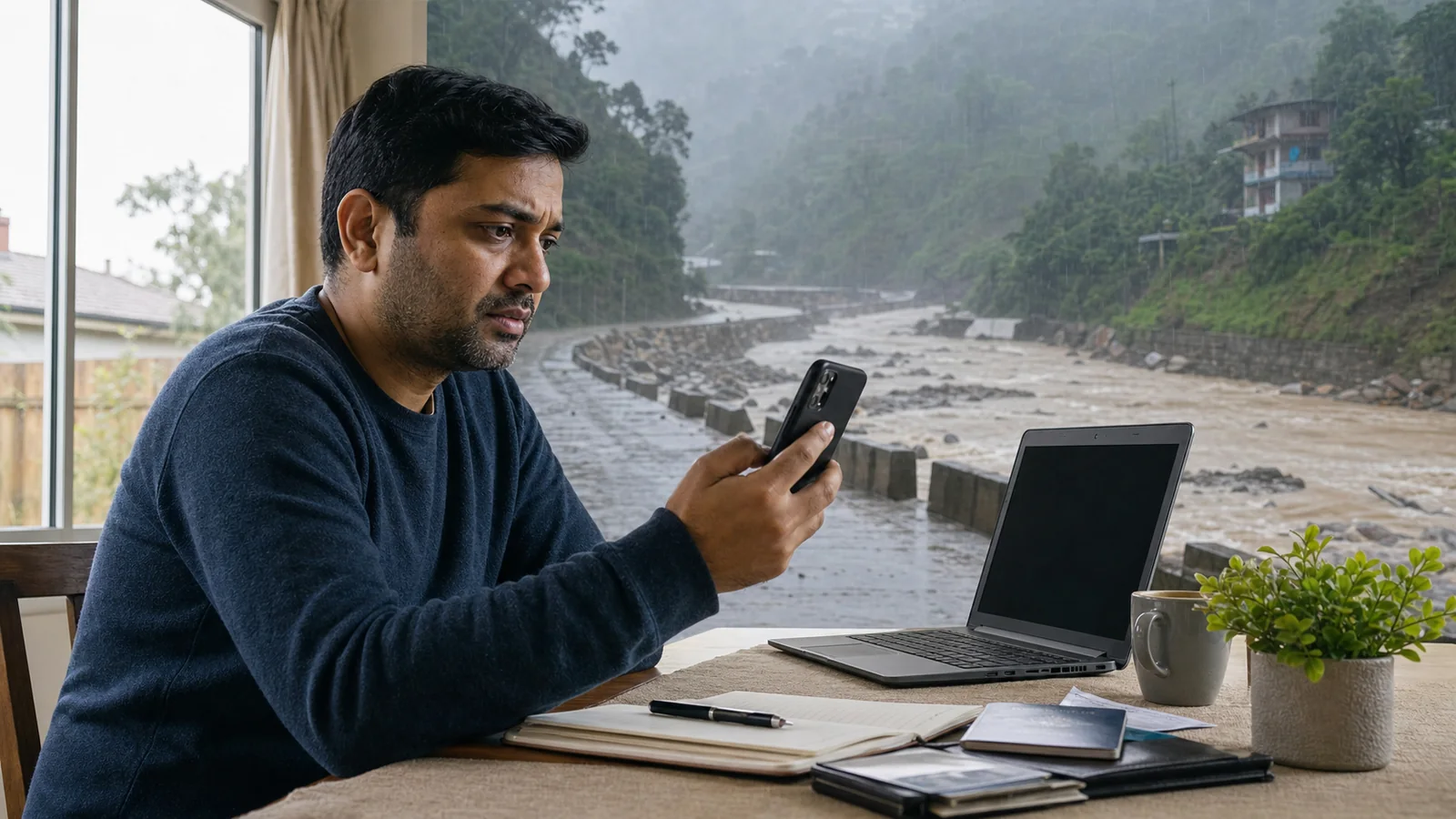
Families in Sydney, Melbourne and across Australia are anxiously seeking contact with loved ones after destructive flash flooding and a mudslide struck Nepal’s Rasuwa District and the Nepal–China border. Australian media have reported that 39 Australians were among those unaccounted for as search efforts continued, including travellers with family connections to Indian-Australian communities.
The situation remains fluid. Families should rely on confirmed advice from Australian authorities, avoid sharing unverified names or casualty claims, and use the official contacts below if a relative may be affected.
What Australian authorities have confirmed
Australia’s Smartraveller advice for Nepal, updated on 28 August, says major flash flooding and a mudslide on 26 August caused significant damage in Rasuwa District and near the Nepal–China border. Authorities have reported deaths and injuries, while roads, transport links and other infrastructure have been badly damaged.
The Sydney Morning Herald and Indian-Australian community media have reported on families waiting for news as the number of missing Australians rose. Indian Link has also documented urgent appeals from Sydney families.
Because communications and transport can fail after a disaster, a temporary loss of contact does not by itself confirm that someone has been harmed. Search operations, traveller checks and family notifications can take time.
If you cannot contact a loved one
Take a methodical approach and keep a written record of each contact attempt. Families should:
- Call and message the traveller through several channels, including SMS, WhatsApp and email. Messages may be delivered when coverage returns.
- Contact their tour operator, hotel, airline or travel agent and ask for the latest confirmed location and itinerary.
- Check with travelling companions and the traveller’s nominated emergency contact.
- Gather their full name, date of birth, passport details, mobile number, recent photograph, itinerary, accommodation and last known location.
- Contact the Australian Government’s Consular Emergency Centre on 1300 555 135 from Australia or +61 2 6261 3305 from overseas.
- If calling within Nepal, contact the Australian Embassy in Kathmandu on +977 1 437 1678.
Do not publish passport numbers, phone numbers or other sensitive details in public social-media appeals. Give identifying information directly to consular officials or police instead.
Advice for Australians currently in Nepal
Smartraveller advises people to contact family, next of kin or their travel provider to confirm they are safe. Travellers should avoid flood-affected areas, stay away from riverbanks and low-lying ground, and move to higher ground immediately if conditions worsen.
Australian authorities also advise postponing overland travel between Nepal and Tibet, China, including Mount Kailash and Lake Manasarovar circuits. Transport may be delayed or cancelled, so travellers should confirm arrangements directly with airlines, tour operators and travel agents before moving.
Practical safety checks
- Follow instructions from Nepalese emergency authorities and monitor reliable local updates.
- Do not attempt to cross damaged roads, bridges, landslide zones or moving floodwater.
- Keep phones charged and conserve battery power; send brief location updates when coverage is available.
- Keep passports, medicines, water and essential documents ready in a waterproof bag.
- Confirm any route change with a trusted local operator rather than relying on crowdsourced maps alone.
Before travelling from Australia
Anyone planning a Nepal trip should reconsider affected routes rather than assuming an organised tour will proceed normally. Check the latest Smartraveller alert, ask the provider for a written operational update, review airline notices and read the natural-disaster exclusions in the travel insurance policy.
Travellers should also register for Smartraveller email updates and leave a complete itinerary with family in Australia. Agree on a daily check-in time and nominate one relative to coordinate communication, reducing confusion and repeated calls during an emergency.
Support for distressed families
Waiting for news can be deeply distressing. If you or someone close to you is struggling, contact Lifeline on 13 11 14. Call 000 if there is an immediate danger to life in Australia. Community organisations can offer practical and emotional support, but official consular channels should remain the main source for tracing assistance and confirmed information.
The takeaway for Indian Australians
This disaster has a direct impact on families across Australia’s Indian and wider South Asian communities. The most useful action now is to verify information, preserve privacy and quickly provide consular officials with accurate traveller details. Conditions can change rapidly, so keep checking Smartraveller and transport providers before making any journey to or through the affected region.