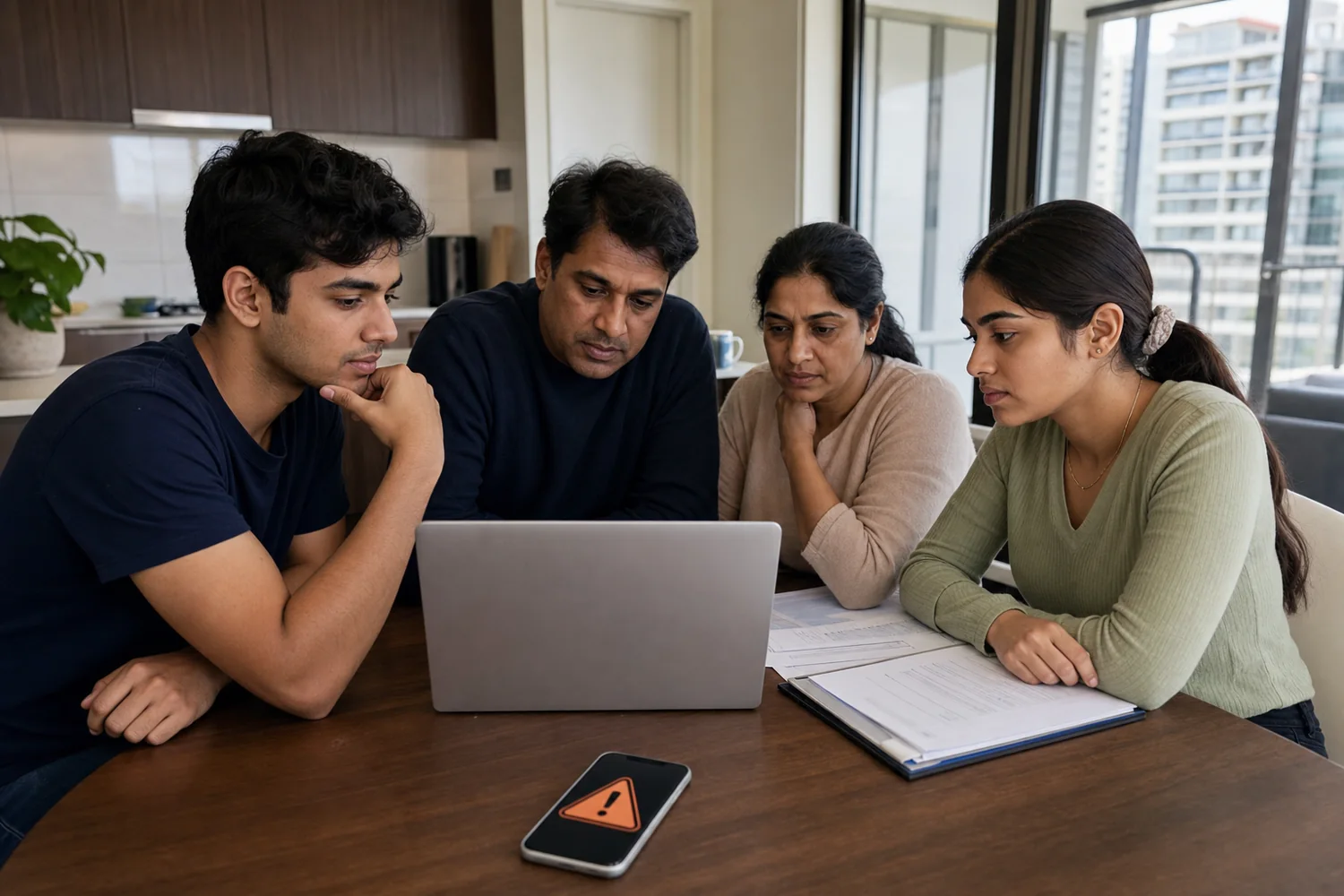
For many Indian students and families, an Australian visa application is not just paperwork — it is a life plan, a financial commitment and often years of savings. That is why fresh concerns about alleged education and visa advice scams should be treated as a serious community warning, especially for people navigating Australia migration updates from overseas or after arriving here.
ABC News recently reported allegations from four international students who said they were misled by a consultancy advertising education and migration advice. The company denied the allegations and said it did not itself provide migration advice, while the report highlighted a wider issue: education agents and migration agents are not the same thing under Australian law.
For Indian Australians supporting relatives, students or partners through the visa process, the practical message is clear: before paying anyone, check who they are, what they are legally allowed to do, and how your money will be protected.
Why this matters for Indian students and families
India remains one of the biggest source communities for international students, skilled migrants and family-linked migration to Australia. That creates a large market for genuine education counselling, but it also creates opportunities for misleading claims, pressure tactics and unclear fee arrangements.
Many families are dealing with complex decisions at the same time: course selection, student visa evidence, health insurance, English requirements, partner documentation, work rights and long-term permanent residency plans. In that pressure, a polished website, WhatsApp number or positive review can feel reassuring. But none of those things prove that a person is authorised to provide migration assistance.
Education agent vs registered migration agent: the key difference
Australia has a formal system for migration advice. The Office of the Migration Agents Registration Authority, known as OMARA, maintains the official register of registered migration agents.
An education agent may help with course information and enrolment processes. However, unless they are also a registered migration agent or an Australian legal practitioner who is permitted to provide immigration legal assistance, they should not be giving personal visa advice or managing a visa strategy.
Before paying, ask these questions
- What is your MARN? Registered migration agents have a Migration Agents Registration Number.
- Can I verify you on the OMARA register? Search the official register yourself, not through a screenshot.
- Who exactly is receiving my payment? Avoid paying personal bank accounts without a formal invoice and written service agreement.
- What service am I paying for? Course counselling, visa form help, appeal work and migration strategy are different services.
- Will I receive receipts and copies of lodged applications? You should have access to your own documents and official lodgement records.
Red flags Indian applicants should not ignore
Most advisers and education counsellors do the right thing. But families should pause if they see any of the following warning signs:
- guarantees of a visa outcome or permanent residency pathway;
- requests to transfer money urgently to a personal account;
- refusal to provide a written agreement, tax invoice or refund terms;
- claims that “inside contacts” can speed up a decision;
- advice to submit false documents, exaggerated work history or fake funds;
- pressure to change courses mainly for a migration outcome;
- limited communication outside WhatsApp or social media; and
- no verifiable MARN where migration advice is being provided.
False documents or misleading information can damage the applicant’s future, even if an agent prepared the paperwork. In serious cases, it can lead to visa refusal, cancellation or difficulty applying again.
A safer checklist before you commit
If you are helping a sibling, cousin, spouse or parent from India, treat the first consultation like due diligence. Keep everything in writing and compare advice with official sources such as Home Affairs, OMARA and the education provider itself.
- Search the agent’s name or business on the official OMARA register.
- Confirm directly with the university, TAFE or college that the education agent is authorised to represent them.
- Use official payment channels where possible, especially for tuition fees and health cover.
- Keep screenshots, invoices, bank receipts and email trails.
- Do not hand over passwords for ImmiAccount or email unless you fully understand the risk.
- Seek a second opinion for refusals, appeals or complex family visa matters.
Where to get help if something feels wrong
If you believe you have lost money or been misled, act quickly. Contact your bank, preserve evidence and report the matter through the right channel.
- Emergency danger: call 000.
- Non-urgent police assistance: call 131 444.
- Cybercrime or online fraud: use ReportCyber at cyber.gov.au.
- Migration agent concerns: check OMARA and use its complaints information where relevant.
- Emotional distress: Lifeline is available on 13 11 14.
The takeaway for the Indian community in Australia
Visa rules can be complicated, and many applicants genuinely need professional help. The goal is not to avoid all advisers — it is to choose the right adviser with evidence, written terms and official verification.
For Indian Australians supporting loved ones through study, partner, skilled or family migration pathways, a five-minute OMARA check and a careful look at payment arrangements can prevent months of stress. If an adviser is genuine, they should welcome your questions.
Sources: ABC News reporting on alleged student visa advice concerns; Office of the Migration Agents Registration Authority register; Home Affairs and ReportCyber public guidance.