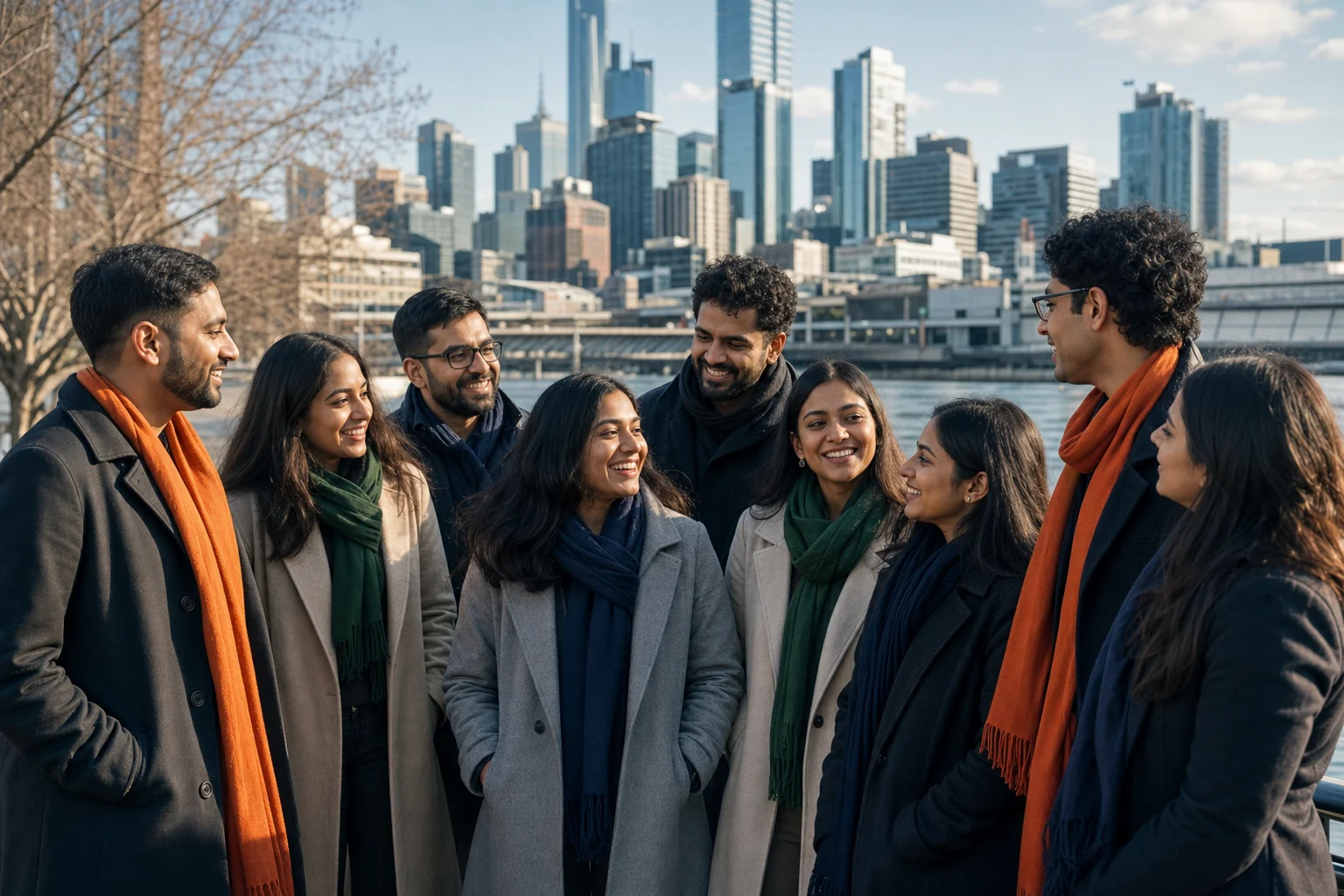
Melbourne has just hosted one of the most visible Australia–India moments of 2026 — and for Indian Australians, the significance goes beyond the stadium lights. Prime Minister Anthony Albanese and Indian Prime Minister Narendra Modi met in Melbourne this week for the Australia–India Annual Leaders’ Summit, with announcements spanning defence cooperation, peaceful uranium exports, critical minerals and broader economic ties.
The visit also placed the Indian community in Australia firmly in the national spotlight. Thousands gathered at Melbourne’s Marvel Stadium for the “Melbourne Meets Modi” community event, while major Australian outlets reported both strong enthusiasm among many diaspora members and peaceful protests from critics. For Indian Australians, the week showed how deeply the relationship between the two countries now reaches into family life, business, education, security and identity.
What was announced in Melbourne?
According to ABC News, Australia and India agreed to deepen defence cooperation after the leaders’ talks, including more complex defence exercises, expanded aircraft deployments from each other’s territories, and increased information sharing between militaries.
The leaders also finalised administrative arrangements that would allow Australia to export uranium to India for peaceful purposes. ABC reported that the move is intended to support India’s expanding nuclear-energy ambitions, while the two countries also flagged deeper cooperation on critical minerals.
These are not small symbolic gestures. They sit within a larger strategic relationship built around the Indo-Pacific, trade, energy transition and people-to-people ties — areas where the Indian diaspora in Australia increasingly acts as a practical bridge.
Why Indian Australians should pay attention
For many families, Australia–India relations can feel abstract until they affect jobs, business opportunities, study pathways or community recognition. This summit matters because it signals that India is being treated not only as a cultural partner, but as a major long-term economic and security partner for Australia.
1. More business and career openings
Closer cooperation in critical minerals, clean energy, technology and defence-adjacent industries could create opportunities for Indian-Australian professionals, entrepreneurs and students with skills in engineering, cyber security, resources, logistics, finance, data and project management.
It will not automatically create jobs overnight. But when governments prioritise a bilateral relationship, industry networks often follow — through trade delegations, university partnerships, professional associations and investment forums.
2. Greater recognition of the diaspora’s role
The Guardian reported that around 25,000 people attended the Melbourne community event, where both leaders praised the Australia–India bond and the role of the Indian diaspora. ABC also quoted Mr Albanese describing Indian Australians as “proud of their heritage” and “proud Australians”, including entrepreneurs, investors and families building a life here.
That public recognition matters. Indian Australians are no longer a quiet migrant story at the margins; they are part of Australia’s mainstream civic, economic and cultural landscape.
3. A need for mature community conversation
The visit also drew protests and debate, including around human rights and Indian politics. In a multicultural democracy, both celebration and criticism can exist at the same time. Community organisations should treat this moment as a reminder to keep public discussion respectful, fact-based and safe — especially online, where political arguments can quickly become personal or divisive.
What families and community groups can do next
For Indian Australians, the practical next step is to turn high-level diplomacy into useful community action. That could include:
- Students and graduates: track Australia migration updates, university partnerships and India-focused career events.
- Business owners: watch for trade missions, Australia–India networking forums and state government export programmes.
- Professionals: build connections in growth sectors such as clean energy, mining services, technology, cyber security and financial services.
- Community leaders: create non-partisan forums where Indian Australians can discuss opportunities and concerns without intimidation.
- Families: stay informed through official government channels rather than relying only on social media forwards.
The takeaway
The Melbourne summit was not just a diplomatic photo opportunity. It confirmed that Australia and India are moving into a more serious phase of partnership — one involving security, energy, trade, skills and community influence.
For Indian Australians, the opportunity is to be more than spectators. Whether through business, study, volunteering, professional networks or local community leadership, the diaspora can help shape how this relationship is understood on the ground. The most useful response now is practical: stay informed, build bridges, and make sure the benefits of closer Australia–India ties reach everyday families as well as boardrooms and government offices.