Australia is experiencing a weather contradiction that households should not ignore: a powerful El Niño is developing, yet much of the country has received unusually abundant rain. Another broad rainband is crossing southern Australia this week, while seasonal modelling points to a potentially exceptionally hot spring and summer.
For Indian-Australian families juggling school runs, shift work, small businesses, visiting parents and interstate travel, the message is not to prepare for only one hazard. Short-term heavy rain and flash flooding can sit alongside a longer-term rise in heat, bushfire and health risks.
Why this El Niño is behaving differently
El Niño is commonly associated with drier conditions in Australia. However, ABC weather analysis published on 22 August reports that 2026 is on track to become the country’s wettest El Niño year in records dating back to 1900. Australia’s national average rainfall for the year has already exceeded 400 millimetres, helped by frequent rainbands crossing the continent.
The Bureau of Meteorology says El Niño is firmly established and strong, with further intensification likely during spring. Importantly, the Bureau also cautions that a strong ocean signal does not automatically produce equally strong effects over Australia. El Niño is only one of several influences on local weather.
One factor behind the rain is unusually warm water in the Indian Ocean. Warm seas can supply more atmospheric moisture to north-west cloud bands and frontal systems, carrying rain across inland and southern Australia.
Where the immediate rain risk is focused
The late-August system is expected to affect the southern two-thirds of the country. ABC’s forecast indicated that much of south-east Australia and parts of Western Australia could receive 15 to 50 millimetres before the end of the month, with rain moving from WA through South Australia and then into Victoria and New South Wales.
Rainfall totals will vary substantially by suburb and region, so households should use current Bureau warnings rather than rely on a national headline. Localised flash flooding can develop quickly, particularly around low-lying roads, creeks, underpasses and major stormwater drains.
The next risk may be heat, not drought
Despite the wet start, temperature outlooks remain concerning. The Bureau says El Niño typically favours warmer-than-average conditions across the southern two-thirds of Australia. ABC reports that climate modelling is pointing to mean temperatures in southern Australia reaching up to 3C above pre-industrial levels during the coming months.
The spring rainfall outlook is mixed: wetter conditions are favoured across much of WA and the Northern Territory, while parts of the eastern seaboard may be drier than average. This means families should avoid assuming that current rain eliminates later heat or bushfire risk. Wet growth can also dry out as temperatures rise.
A practical household checklist
Prepare for rain now
- Check the Bureau of Meteorology warnings and your state emergency app before commuting or travelling.
- Clear gutters and secure loose outdoor items where it is safe to do so.
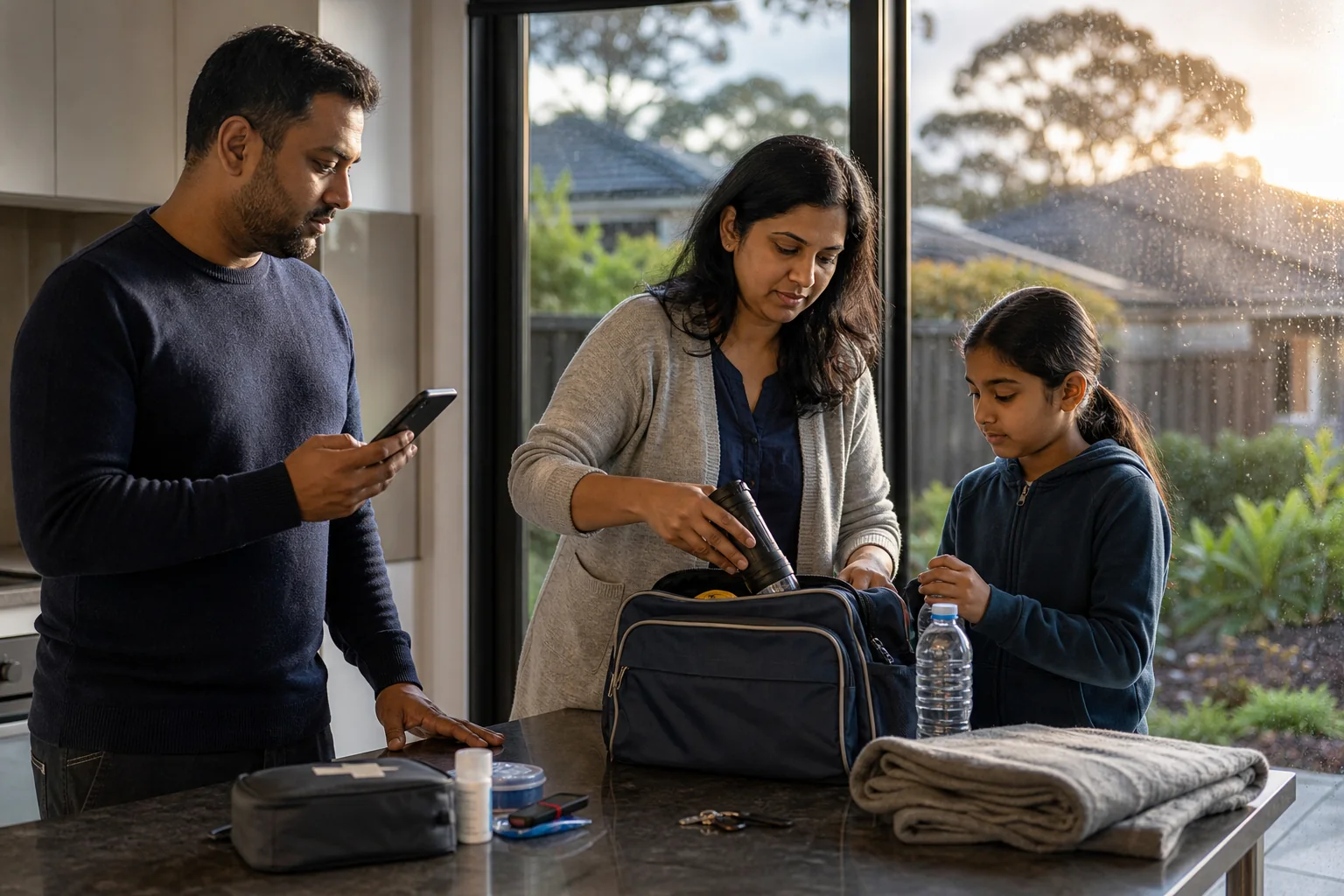
- Keep medicines, identity documents, chargers, a torch and drinking water together in an accessible emergency kit.
- Confirm that visiting parents or relatives understand Australian warning terminology and know the household meeting point.
- Never drive, ride or walk through floodwater. Victoria’s SES says as little as 15 centimetres of moving water can take control of a car.
Prepare early for heat
- Arrange air-conditioner servicing before the first major heatwave and identify the coolest room in the home.
- Check on older relatives, pregnant family members, young children and people with chronic health conditions.
- Review workplace heat procedures, especially for construction, delivery, rideshare, hospitality and outdoor work.
- Make a backup plan for power interruptions, including charged battery packs and safe storage of temperature-sensitive medicines.
- For regional travel or community events, monitor fire danger ratings and total fire bans close to departure.
Advice for renters and small-business owners
Renters should report leaks, unsafe electrical issues or drainage problems to the property manager in writing and keep photographs and dates. Businesses should protect stock from floor-level water, back up essential records and confirm staff communication arrangements if transport is disrupted.
Community organisations planning spring gatherings should include shade, drinking water, weather cancellation procedures and a clear way to contact attendees. These simple measures are particularly valuable for large multicultural events where guests may travel long distances.
Stay informed, not alarmed
This unusual season is a reminder that Australian weather cannot be reduced to “El Niño equals drought”. Follow location-specific forecasts, prepare for the hazard in front of you and keep heat plans ready for the months ahead.
For emergency help during a storm or flood, call your state or territory SES on 132 500. Call Triple Zero (000) for life-threatening emergencies.
Sources: ABC News weather analysis, Bureau of Meteorology Southern Hemisphere monitoring, and Victoria State Emergency Service flood advice. Forecasts and warnings can change; check official updates for your location.