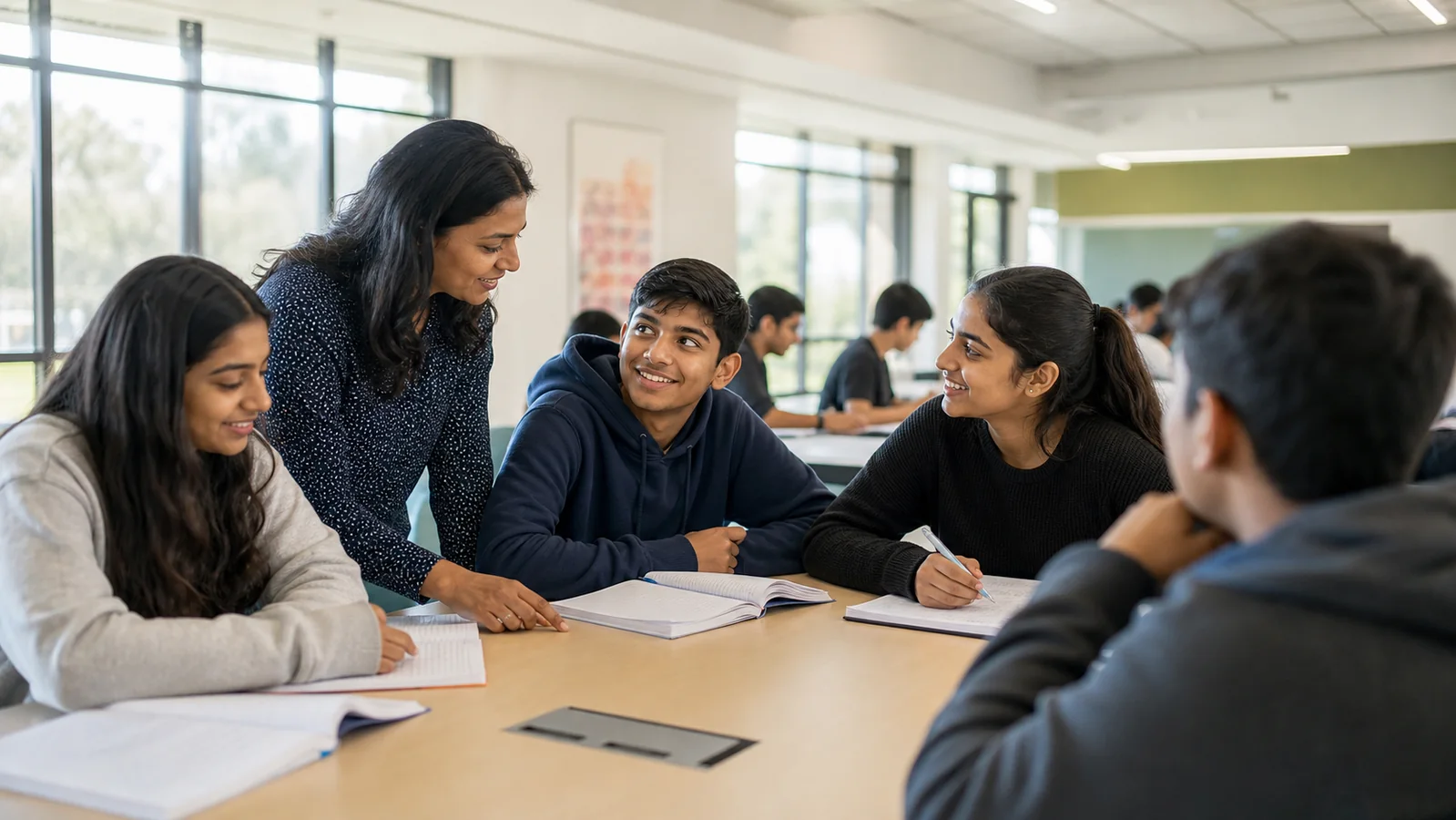
For many Indian-Australian families, a heritage language is the bridge between children, grandparents and community. A new federal funding push aims to make that bridge stronger by helping students continue Indian-language study into Years 11 and 12—not stop when secondary school becomes more demanding.
The Australian Government has announced support for programs covering eight Indian languages: Bengali, Gujarati, Hindi, Malayalam, Punjabi, Tamil, Telugu and Urdu. The investment sits within the Fluency in Asian Languages stream of the Community Language Schools Grants Program and will fund teaching resources, teacher development and stronger senior-secondary pathways over the next four years.
What the Indian language education funding covers
The initiative is designed to address a familiar problem for community language schools: younger children may have access to weekend classes, but opportunities often narrow as students move through high school. The funded projects aim to build a clearer path from the middle years through to senior secondary study.
According to the government announcement reported by Indian Link, the broader Community Language Schools Grants Program represents a $25.6 million investment over four years from 2025–26. It supports more than 80 languages and over 90,000 students nationally.
For Indian community Australia families, the practical benefits may include:
- better lesson plans and age-appropriate learning resources;
- professional development for community language teachers;
- more classes and learning pathways for students in Years 7–12;
- online resources that can reach families outside major cities; and
- more opportunities to use language skills in real-world settings.
Which organisations will deliver the programs?
Several universities and community education organisations will lead different parts of the expansion.
New South Wales
The NSW Federation of Tamil Schools will strengthen Tamil learning for secondary students through improved resources and practical language activities. The Tamil Study Centre Homebush will begin a Tamil fluency program in Homebush, with plans to expand across NSW and make online resources available nationally.
The University of Sydney will help community language schools deliver classes for Years 7–12, train more teachers and develop resources that can be accessed around Australia.
Victoria and the ACT
Community Languages Victoria will create an online Teachers Hub and support Asian-language learning from the middle years through senior secondary school. In Canberra, the Australian National University will establish Digital Language Hubs offering resources and professional development for community language teachers.
Families should note that the announcement describes funded program development, not an immediate guarantee that every language will be offered at every local school. Availability will depend on participating community schools, delivery timelines and local enrolment.
Why this matters to Indian-Australian families
Heritage-language learning is not only about reading and writing. It can help young people speak confidently with relatives in India, understand cultural traditions, participate in community life and maintain a stronger sense of identity.
Multilingual skills can also have practical value in higher education, community services, diplomacy, trade and workplaces serving culturally diverse populations. Minister for Multicultural Affairs Dr Anne Aly said language connects young people with family, culture and community while opening doors to study, employment and opportunity.
Assistant Minister for Citizenship, Customs and Multicultural Affairs Julian Hill also highlighted the role of community language schools in strengthening intergenerational ties and celebrating cultural identity.
What parents can do now
The programs will develop over the four-year funding period, so families may need to watch for local announcements rather than expect every class to begin immediately. Parents interested in Hindi, Punjabi, Tamil, Telugu or another included language can take these steps:
- Contact your local community language school and ask whether it is linked to a funded project.
- Ask about secondary pathways, particularly classes for Years 7–12 and any recognised senior-secondary options.
- Register interest early because demand can help organisations plan classes and teacher numbers.
- Check online access if you live regionally or cannot attend a weekend centre.
- Speak with your child’s school about how community language study may fit alongside their regular timetable and senior-school workload.
A stronger pathway beyond weekend classes
This funding is a welcome step towards treating community languages as sustained educational pathways rather than optional childhood activities. Its success will depend on accessible classes, well-supported teachers and genuine opportunities for teenagers to keep learning through their senior years.
Indian-Australian parents should monitor updates from participating organisations and local language schools over the coming months. Early enquiries can help families understand what is available—and signal strong demand for Bengali, Gujarati, Hindi, Malayalam, Punjabi, Tamil, Telugu and Urdu programs in their area.