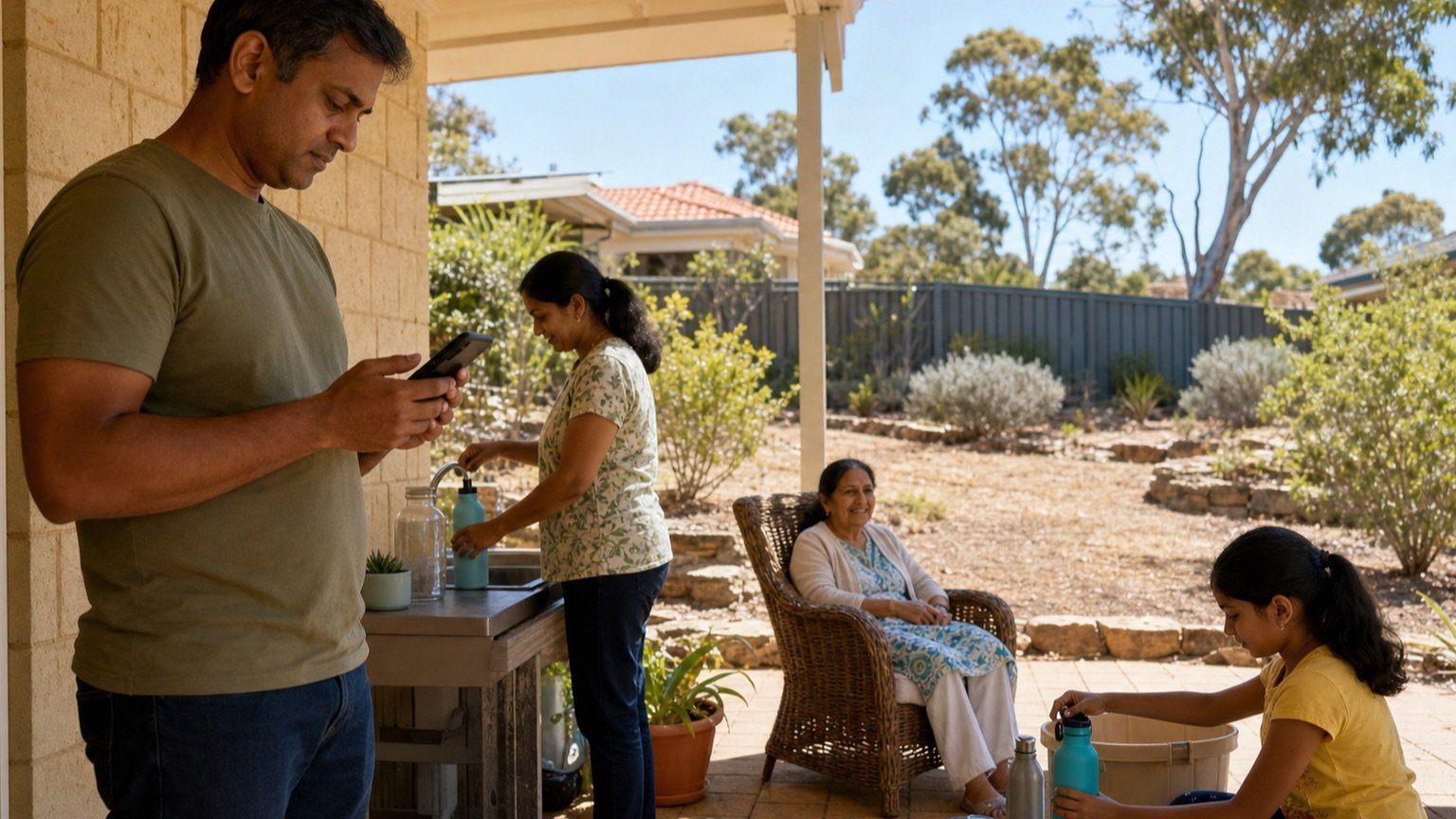
Australia is heading into a warmer and drier stretch, and Indian-Australian households should start preparing before the peak heat arrives. The Bureau of Meteorology says El Niño is firmly established and strengthening, while its August-to-October outlook favours below-average rainfall across much of eastern and southern Australia and warmer-than-average days and nights across most of the country.
The outlook does not mean every suburb will be hot or dry every day. It does, however, increase the case for early planning—particularly for families with older relatives, young children, outdoor workers, international students living away from family, and people managing chronic health conditions.
What the latest El Niño outlook says
El Niño is a large-scale warming pattern in the tropical Pacific Ocean that can shift weather patterns around the world. In Australia, it is commonly associated with reduced rainfall in eastern parts of the country, warmer daytime temperatures in the south and an increased risk of dangerous fire weather, although local outcomes vary.
The Bureau’s long-range forecast indicates that the coming months are likely to bring:
- below-average rainfall across much of eastern and southern Australia, as well as parts of the north;
- above-average rainfall in parts of the north-west;
- warmer-than-average days and nights across most of Australia; and
- conditions that may increase pressure on water supplies, gardens, farms and bushfire preparedness if dryness persists.
ABC News has also reported that the Pacific warming is developing rapidly, raising concern about heightened heat, drought and fire risks later in 2026. Seasonal forecasts describe probabilities rather than guarantees, so households should follow local warnings instead of assuming national headlines apply equally to every location.
Why Indian-Australian families should prepare now
Many Indian Australians already understand extreme heat, but Australian homes, work patterns and emergency systems can create different risks. A poorly insulated rental can become dangerously hot. A long commute, outdoor shift or delivery job can increase heat exposure. Newly arrived residents may also be unfamiliar with fire-danger ratings, total fire bans or the warning apps used in their state.
Heat can be especially dangerous for older people, babies, pregnant women, people with heart or kidney conditions, and anyone taking medicines that affect hydration or temperature control. Families supporting parents in Australia—or relatives visiting on long stays—should discuss a simple hot-weather plan before temperatures rise.
A practical household checklist
Prepare your home
- Check fans and air-conditioning now, clean filters and ask the landlord promptly about essential repairs.
- Use blinds, curtains and external shading to block afternoon sun, especially on west-facing windows.
- Identify the coolest room and know where to go if the home overheats, such as a library, shopping centre or community facility.
- Clear dry leaves from gutters and around the home where it is safe to do so. In bushfire-prone areas, follow your state fire agency’s property-preparation advice.
Protect family members and workers
- Keep water accessible and do not wait until you feel thirsty to drink during hot conditions.
- Move strenuous exercise, gardening and outdoor work to cooler hours where possible.
- Check award conditions, workplace policies and safety procedures if heat affects your job. Employers have duties to manage health and safety risks.
- Create a family check-in plan for older relatives, students living alone and neighbours who may need help.
- Never leave a child, older person or pet in a parked vehicle, even briefly.
Know your local warning channels
Save the Bureau of Meteorology website and your state or territory emergency service in your phone. Warning systems and apps differ by location, including VicEmergency in Victoria, Hazards Near Me in NSW, Emergency WA and local services elsewhere. Turn on emergency alerts, but do not rely on a single app or social-media post.
If your family mainly communicates in Hindi, Punjabi, Gujarati, Tamil, Telugu or another community language, agree in advance who will translate official advice. Use information from government and emergency agencies rather than forwarded messages that cannot be verified.
Recognise heat illness early
Healthdirect advises that heat exhaustion can involve heavy sweating, weakness, headache, dizziness, nausea or fainting. Move the person to a cooler place, lie them down, cool them and provide fluids if they are conscious and able to drink.
Heatstroke is a life-threatening emergency. Warning signs can include confusion, loss of coordination, collapse, seizures or very high body temperature. Call Triple Zero (000) for an ambulance and begin cooling the person while waiting for help. Do not give fluids to someone who is unconscious or unable to swallow safely. For non-emergency health advice, call healthdirect on 1800 022 222.
The takeaway for the Indian community in Australia
El Niño does not make an extreme season inevitable, but the combination of strengthening Pacific warming, a drier outlook and warmer forecast temperatures is a clear prompt to prepare. Check your home, workplace arrangements, medicines, warning sources and family contact plan now. A few practical steps taken before spring can make a major difference when the first severe heatwave or fire-weather warning arrives.
Sources: Bureau of Meteorology long-range forecasts and El Niño monitoring; ABC News reporting published 31 July 2026; Healthdirect guidance on hot-weather risks and heatstroke.