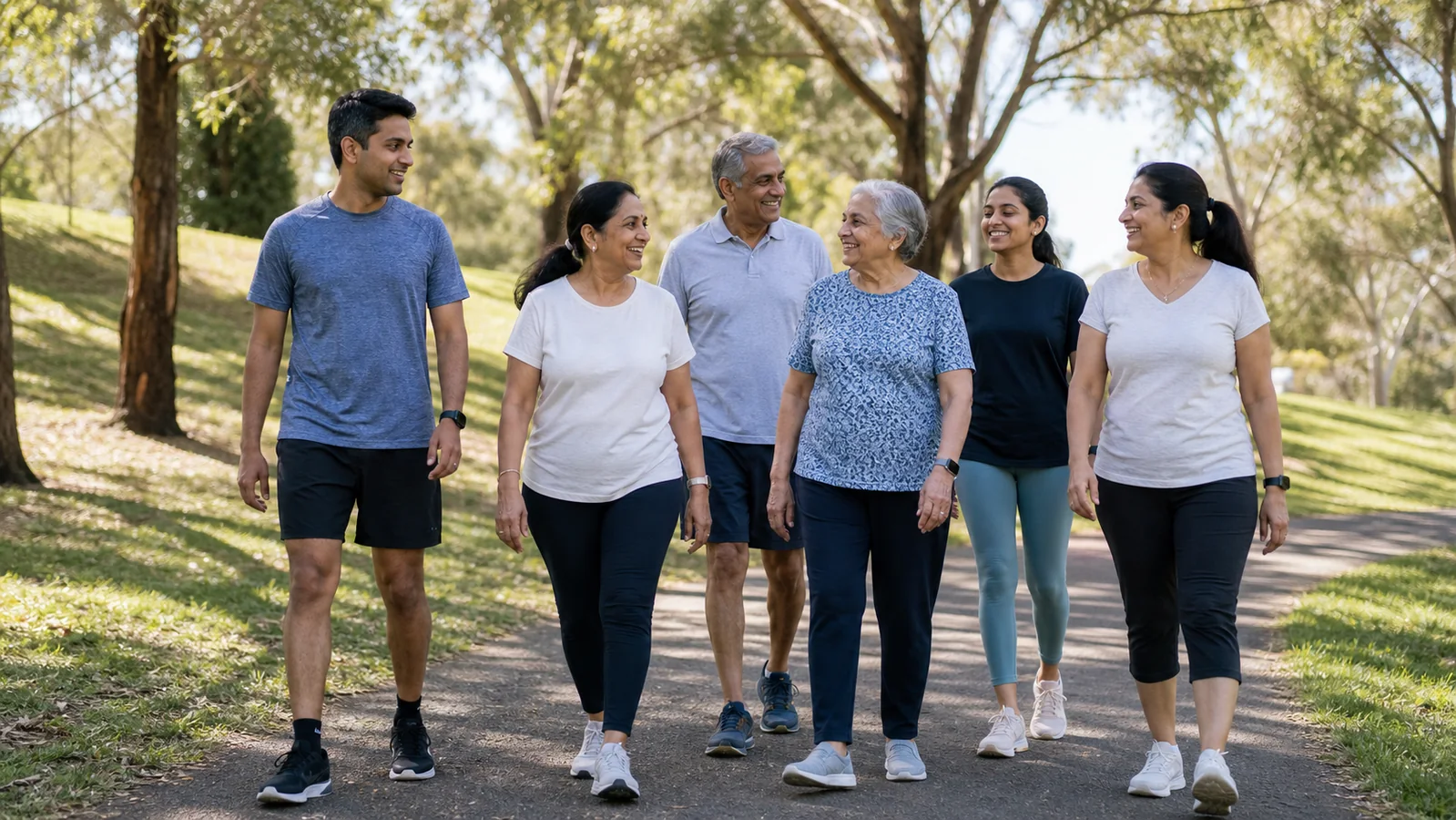
A family walk, a social cricket game or a gentle yoga session can do more than improve fitness: it can create routine, connection and breathing space when life feels demanding. That is the message for Indian-Australian families during NSW Multicultural Health Week, running from 31 August to 6 September 2026.
This year’s theme, “Improving mental health and wellbeing through physical activity”, is especially practical for migrant households balancing work, study, settlement pressures and caring responsibilities across generations. The campaign is a NSW initiative funded by the NSW Ministry of Health and led by the NSW Multicultural Health Communication Service.
Why movement is part of mental wellbeing
The official Multicultural Health Week information says regular physical activity can improve sleep, energy, confidence, self-esteem, mood and concentration. It may also help reduce stress, ease symptoms of anxiety and lower the risk of chronic health conditions.
Exercise is not a replacement for professional mental health care. It is, however, an accessible support that can sit alongside care from a GP, psychologist or other qualified professional. For people who have been inactive, are pregnant, live with a medical condition or experience pain, a GP or physiotherapist can help identify a safe starting point.
Make activity culturally familiar and social
Getting active does not have to mean buying a gym membership or following an unfamiliar fitness program. Activities already common in Indian community life can be adapted to suit age, mobility and confidence.
- Walk and talk: organise a 20- or 30-minute walk with relatives, neighbours or friends after school, work or dinner.
- Bring back a favourite game: try social cricket, badminton, kho-kho or another low-pressure group activity at a local park or community centre.
- Use music: Bollywood dance, bhangra, garba practice or a home dance session can make movement enjoyable rather than another obligation.
- Choose gentler options: yoga, stretching, tai chi, gardening or a short walk may suit older adults and people rebuilding fitness.
- Include children: bike rides, playground visits and family ball games give adults and children time away from screens while building a shared habit.
The best activity is usually one that is affordable, safe and realistic enough to repeat. Starting with ten minutes is still a start; consistency matters more than an ambitious plan that quickly becomes unmanageable.
A realistic target—not an all-or-nothing test
The Australian Government’s movement recommendations for adults aged 18 to 64 encourage moderate- to vigorous-intensity activity for 30 minutes or more on most days. The broader guidance also emphasises reducing prolonged sitting and recognises that needs differ by age.
Families can make that goal easier by breaking activity into smaller blocks. A brisk walk to the station, ten minutes outside at lunch and an evening stroll can all contribute. Older relatives may need balance and strength activities as well as walking, while children have different movement needs; the federal guidelines provide age-specific advice.
Remove the common barriers
Time and family responsibilities
Combine movement with existing routines: walk during a child’s sports practice, take a phone call outside or invite visiting relatives to the park rather than planning another seated gathering.
Cost
Walking routes, council parks, outdoor fitness equipment and community recreation programs can be free or low-cost. Local councils and libraries often list nearby activities, including programs designed for seniors.
Language and confidence
Ask a trusted friend to attend the first session, look for culturally specific community groups, and request an interpreter when speaking with a health service. The Translating and Interpreting Service can be reached on 131 450; callers can ask to be connected to healthdirect or another service in their language.
A one-week family challenge
For the rest of Multicultural Health Week, choose one small activity and schedule it three times. Keep it social if that helps: create a family walking group, meet another parent at the park, or invite an older relative to join a gentle session. At the end of the week, discuss whether sleep, stress, mood or connection felt any different—and decide what is worth continuing.
The campaign’s bigger lesson is straightforward: mental health support can begin with everyday community connection, but nobody should struggle alone. If distress is persistent or worsening, contact a GP or health professional. Lifeline provides 24-hour crisis support on 13 11 14. If someone’s life is in immediate danger, call Triple Zero (000).